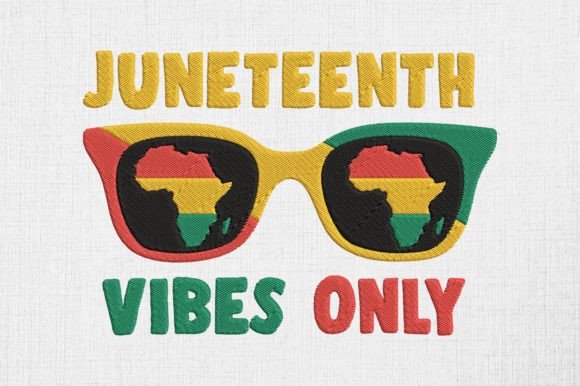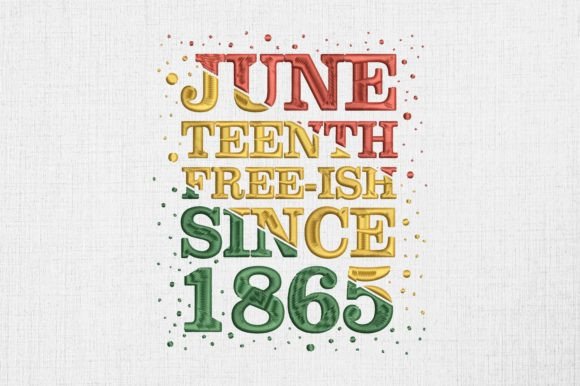
Juneteenth Free-ish Since 1865
As an embroidery designer with years of experience, I often find myself evaluating new Creative Fabrica embroidery designs for real-world use. Juneteenth Free-ish Since 1865 caught my attention not just for its historical significance, but for how it translates into a machine embroidery design that can elevate handmade products and commercial embroidery projects alike.
First Impressions: Visual Mood and Detail Level
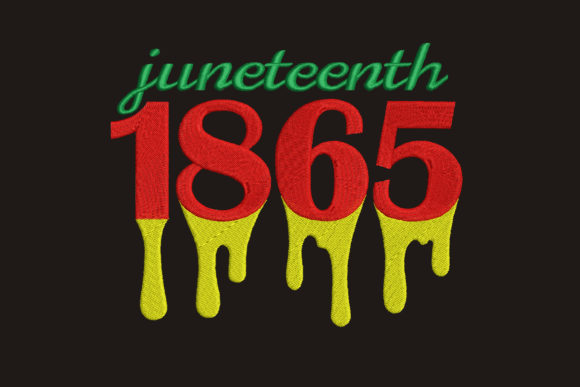
The first thing that stands out about Juneteenth Free-ish Since 1865 is its visual mood. It carries a sense of pride and celebration, with a design that feels both meaningful and decorative. The level of detail is impressive—there’s a balance between intricate elements and clean lines that makes it adaptable to various fabric types and project sizes.
It features a mix of applique design and satin stitch, with some areas using fill stitch to add depth. The overall aesthetic is modern yet timeless, making it suitable for t-shirts, dresses, and home decor items. It’s the kind of design that can be used as a focal point or as part of a larger collection.
Stitching Personality and Decorative Appeal
Juneteenth Free-ish Since 1865 has a stitching personality that leans toward bold and expressive. It uses running stitch in certain areas to create texture, which adds a handcrafted feel without being too labor-intensive. This makes it ideal for personalized gift items or custom apparel where a unique touch matters.
Its decorative appeal is strong, especially when applied to light-colored fabrics. However, it also works well on darker materials with proper thread color contrast. The design doesn’t overwhelm the fabric, which is a key consideration for small business owners looking to maintain a professional look across different product lines.
Real Embroidery Performance: Practical Use Cases
When considering Juneteenth Free-ish Since 1865 for real projects, I tested it on several materials. It performed well on cotton tote bags and sweatshirts, with no issues in terms of stitch density or fabric distortion. For smaller hoop sizes, the design scales nicely, making it suitable for caps, patches, and baby items.
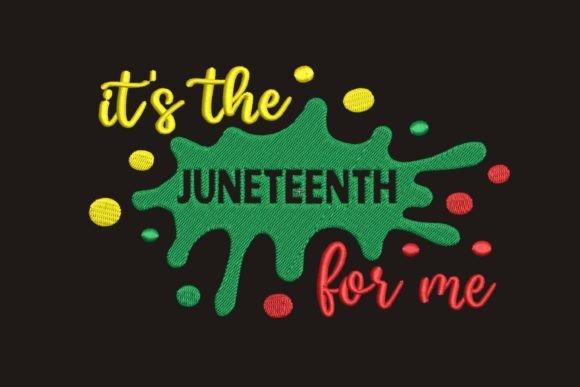
The tiny lettering in the design is crisp and clear, which is essential for embroidered patches or aprons. It also handles curved cap surfaces without losing definition, which is a common challenge with complex embroidery files. The dense stitch areas are well-balanced, so they don’t cause puckering on stretchy fabrics.
Textured and Stretchy Fabrics: A Designer’s Consideration
One of the biggest challenges with any embroidery design is how it performs on textured or stretchy fabrics. Juneteenth Free-ish Since 1865 holds up reasonably well, but it requires a bit more attention to stabilizer use. For best results, I recommend using a medium-weight cutaway stabilizer on stretchy materials like jersey knit or spandex blends.
On dark fabrics, the design maintains good visibility, but I suggest testing with different thread colors to ensure contrast. For example, using a white or light gray thread on a black base can make the design pop without being too harsh.
Commercial and Handmade Applications
Juneteenth Free-ish Since 1865 is versatile enough to be used in both handmade and commercial settings. As a digital embroidery file, it’s perfect for Etsy sellers and small business owners who want to offer unique, customizable products. It can be used for printable mockups, allowing customers to visualize the final product before purchasing.
For commercial embroidery, this design adds value by offering a fresh, relevant theme that aligns with holidays and cultural celebrations. It can be incorporated into boutique merchandise, seasonal handmade gifts, or even as part of a larger collection for craft fairs and online stores.
Design Assets and Finished Product Presentation
When working with Juneteenth Free-ish Since 1865, it’s important to consider how the finished product will be presented. The design looks great on product photography, especially when paired with high-quality images that highlight the embroidery details. This can help boost customer engagement and increase the perceived value of the handmade product.
For brand consistency, this design offers a cohesive look that can be used across multiple product types. Whether it's a baby blanket, kitchen towel, or pillow cover, it maintains a professional appearance that appeals to a wide range of buyers.
Practical Embroidery Notes
Before using Juneteenth Free-ish Since 1865, I always recommend testing on scrap fabric to get a sense of how the stitches will look. Check the thread color contrast, review the stitch density, and confirm the hoop size needed for your project. If you're planning to sell finished items, make sure to check the licensing details on the Creative Fabrica product page to ensure compliance.
Also, inspect small details after stitching, especially if the design includes layered elements. Proper stabilizer use is crucial, particularly when working with delicate or stretchy fabrics. Finally, compare light and dark fabric mockups to see how the design adapts to different backgrounds.
Final Thoughts: Is Juneteenth Free-ish Since 1865 Worth It?
After testing Juneteenth Free-ish Since 1865 in real project scenarios, I can confidently say it’s a valuable addition to any embroidery designer’s toolkit. It’s well-suited for a variety of applications, from custom apparel to personalized gifts, and it brings a meaningful message that resonates with many audiences.
Whether you’re an Etsy seller, a small business owner, or a creative entrepreneur, this design offers both aesthetic appeal and practical functionality. It’s a great example of how Creative Fabrica embroidery can support both artistic expression and commercial success.